I'm leaving on a redeye tonight for a quick business trip to New York City. I can't begin to tell you how much I'm looking forward to the East Coast winter.
Item One on the agenda is a presentation that Editor Charlie, literary agent Kate Lee and I will be giving for the Bookbinders' Guild of New York, which has a monthly meeting on topics of interest to its publishing industry members (not all of whom, I gather, are directly involved with the physical binding of books). Tuesday's topic is "Which Came First: The Book or the Blog?" Editor Charlie and I will talk about how Mom's Cancer happened and, I think, some of the special issues involved in publishing graphic novels. Right now, he and I are struggling mightily to figure out why the PowerPoint slides I sent him aren't working. It's very possible my talk will be illustrated with shadow puppets.
Items Two through Seventeen consist of some other business, and with luck I'll get a bit of personal time on Wednesday to complete a little pilgrimage. We'll see if my schedule and the weather cooperate.
Pictures to come, I'm sure. I like New York.
.
Monday, February 8, 2010

Friday, February 5, 2010
The Catbayashi Maru
So I've been in a Star Trek frame of mind the past couple of days anyway, and then 10 minutes ago my cartooning pal Mike Lynch sends me this:

You'll either get it or you won't. If you don't, that's OK--we can still be friends. But if you do, we can be good friends.
People write "LOL" all the time even when they don't mean it (in fact, that's an official "Lolcat" above), but I actually laughed out loud when I saw that. Thanks, Mike. Your debt to me is repaid; that was worth 100 quatloos.
.Monday, February 1, 2010
Review: Grammy Awards v. Iron Chef America
The Grammy Awards and Iron Chef America were on at the same time last night. We flipped back and forth.
Lady Gaga and Elton John open the Grammys singing in some sort of industrial hellscape from which both emerged covered in soot. My wife Karen thought they looked ridiculous. I said I thought that was the point. They sounded a'ight, dawg. B+.
Alton Brown intros that tonight's Iron Chef battle is coming from Kitchen Stadium #3 floating somewhere in the Maldives and announces that the Chairman's yacht has just docked. I like it when Iron Chef nods to its own ridiculous mythos. A.
Stephen Colbert kicks off the Grammys' first award by inducting his teenage daughter into the insincerely earnest (or earnestly insincere) comedy business. Jokes touch on the iPad, and Dad not being cool. She seems like a nice kid and it's funny instead of cringeworthy. A.
Today's challenger is chef Michael Smith, author of many cookbooks and star of Food Network Canada. There's a Food Network Canada? Smith looks like a big fella, towering over the Chairman (who could still kill him in two seconds if he wanted), and gets into the histrionic spirit of Kitchen Stadium by announcing his challenge of Iron Chef Bobby Flay with the same passion Patton brought to battling Rommel. A.
Green Day performs "21 Guns" with the Broadway cast of the upcoming play "American Idiot." I like Green Day and am a sucker for big choruses that raise goosebumps. A highlight of the Grammys for me. A.
The secret ingredient: Avocado! Karen groans--avocado's a gimme for the southwestern-style Flay. Do they even have avocados in Canada? I don't like avocado or guacamole at all, making me something of a heretic here in California. I find it flavorless and phlegmy. I keep trying it, hoping that someday I'll finally get what everyone else raves about. No luck so far. Points off for both throwing Flay a softball and using an ingredient I wouldn't enjoy. C.

Taylor Swift wins for Best Country Album. She sings country? For confusing me, that award earns a C.
Tonight I learned that the entire California avocado industry is descended from a single Haas avocado tree. I did not know that. When Mom and my sisters moved to Hollywood, their neighbor had a giant avocado tree whose branches hung over into their yard. It was a beautiful tree that produced year-round, but Mom was afraid that one of those plummeting shotputs would kill her dog Hero. All they did was make him fat; Hero loved to eat avocados. For teaching me something I didn't know and reviving a happy memory, A.
Pink sings "Glitter in the Air" rotating from a cloth sling dangling from the ceiling while spraying water on everyone below like a lawn sprinkler. Karen imagined all the enraged audience members getting their stylin' tuxes and spangly gowns soaking wet. I liked it, and not just for the single-ply gauze bandage Pink was wearing. At the very least, you've gotta admire her work ethic, plus points for potentially annoying spoiled rich people. A-.

Chef Smith pulls out a slab of Canadian bacon, maple syrup, moose loin, a six-pack of Molsons, and a box of Tim Hortons donuts, and politely gets to work. Nah, just kidding. For setting back international relations 50 years, B+ for me.
Black-Eyed Peas perform "Imma Be" and the ubiquitous "I Got a Feeling." That was . . . energetic. The legion of back-up dancers costumed in balloon-animal burkas and silver stereo speakers really made me miss grunge. And I didn't even like grunge. B-.
Tonight's Iron Chef judges are Donatella Arpaia and Anya Fernald, who have something to do with food, and actor Antonio Sabato Jr., who doesn't. That's OK. One of the charms of the original Japanese Iron Chef was the old-bat judge whose occupation was always listed as "fortune teller." I miss the old Iron Chef. B. (When Jeffrey Steingarten is judging, it's an automatic A.)
Stephen Colbert wins a Grammy for Best Comedy Album. He asks his daughter in the audience if she thinks he's cool now. She gives him a very sweet, teary-eyed nod that tugged at my Daddy heartstrings. Oh, would that I could ever make my daughters that proud of me. A.
Bobby Flay breaks out some chipotle and ancho chiles. Really thinking outside the box tonight, Bobby. C.
Several old and some dead people win Grammy lifetime achievement awards. One dude wins a Grammy Award for helping produce Grammy Award shows, which seems pretty incestuous to me (speaking of nodding to your own ridiculous mythos). It strikes me, not for the first or last time, how little people in the same line of work can have in common. For example, Katy Perry and Alice Cooper, or Placido Domingo and Mos Def, or Andrea Bocelli and Mary J. Blige, to name three actual pairings from last night. C for inappropriate combos and over-self-congratulation + A for weirdness = B average.
Chef Smith's trying some interesting, playful things. Fried avocado balls, avocado pearls nestled in raw oysters. No idea how any of it would taste and I still don't like avocados, but you can see a creative culinary mind at work. B+.
Taylor Swift sings with Stevie Nicks, first Stevie's "Rhiannon" and then Taylor's "You Belong With Me." The performance was a revelation--that revelation being that Taylor looked and sounded like a thin, flat, callow, boring, insubstantial wisp next to Stevie's rich, deep, seasoned, compelling bleat. "Rhiannon" is also a much better song than Ms. Swift's ode to being the head cheerleader in love with the team captain. Taylor seems like a very nice young woman, but the contrast was striking and not in her favor. C for Swift + A for Nicks = B average.
Bobby Flay chunks up a big beef shoulder into 2-inch cubes. Karen says, "That meat looks awfully fatty." I predict that he's going to put it into a pressure cooker to render out the fat and get a good braise on it. Seconds later, Flay tosses it into a pressure cooker. For making me look smart, an A.
Ah, the Michael Jackson tribute, in 3-D. Karen and I pull out our red-blue anaglyphic specs. The 3-D effect is pretty good, although I'm disappointed there's no footage of Jackson himself. That would've been fun (even a clip from Captain Eo could've been repurposed). Good performances, though again some memory-jolting bits of classic MJ songs would've been welcome. Jackson's son Prince Michael and daughter Paris speak at the end, and my how they've grown! Seems like just yesterday they were being dangled out of windows. Prince is a poised young man whose affect could have been Stepford-creepy if he hadn't made a couple of endearing mistakes reading the teleprompter. Paris seems sweet. And ain't genetics funny? B.

The Grammys offer a nice tribute to Les Paul, whom I'm a big admirer of. I really liked that Jeff Beck and Imelda May went on to perform Paul's "How High the Moon." Great artists, great music, another highlight of the evening for me. A.
For one course, Chef Smith offers the judges three guacamoles prepared differently. When plating, he simply leaves the guac in the three food processor bowls in which they were made and fills them to the top with three varieties of chips. It's either a very gutsy move or a very lazy one. I like it. Five full points for plating design from me = A.
Rappers Lil Wayne, Eminem, and Drake get together for a song backed by the drummer from Blink 182, who's really wailing away on his kit. Whenever I see rappers on these award shows backed by bands or orchestras, I imagine that there's some kid in there who picked up an instrument at age 8, practiced every day, joined his or her small-town junior symphony, spent four hard years mastering their skills at Julliard, studied overseas, entered brutal competitions, scraped hard to land every gig they could get, and is now earning a couple hundred bucks playing backup for a multimillionaire whose musical talent consists of rhythmically reciting bad poetry. D for the bleepin' rappers + B for the drummer = C.
Judging is underway. Smith may be in trouble. The judges don't seem taken with his avocado-white chocolate mousse. C.
Taylor Swift's "Fearless" wins the Grammy for Album of the Year. I'm nonplussed, but good for her. B-.
Two champions met tonight in Battle Avocado here in Kitchen Stadium. The judges have spoken. And the winner is . . . Iron Chef Flay. B-. (If Smith had won, it'd be a B+ because Flay just seemed to coast tonight.)
Lady Gaga and Elton John open the Grammys singing in some sort of industrial hellscape from which both emerged covered in soot. My wife Karen thought they looked ridiculous. I said I thought that was the point. They sounded a'ight, dawg. B+.
Alton Brown intros that tonight's Iron Chef battle is coming from Kitchen Stadium #3 floating somewhere in the Maldives and announces that the Chairman's yacht has just docked. I like it when Iron Chef nods to its own ridiculous mythos. A.
Stephen Colbert kicks off the Grammys' first award by inducting his teenage daughter into the insincerely earnest (or earnestly insincere) comedy business. Jokes touch on the iPad, and Dad not being cool. She seems like a nice kid and it's funny instead of cringeworthy. A.
Today's challenger is chef Michael Smith, author of many cookbooks and star of Food Network Canada. There's a Food Network Canada? Smith looks like a big fella, towering over the Chairman (who could still kill him in two seconds if he wanted), and gets into the histrionic spirit of Kitchen Stadium by announcing his challenge of Iron Chef Bobby Flay with the same passion Patton brought to battling Rommel. A.
Green Day performs "21 Guns" with the Broadway cast of the upcoming play "American Idiot." I like Green Day and am a sucker for big choruses that raise goosebumps. A highlight of the Grammys for me. A.
The secret ingredient: Avocado! Karen groans--avocado's a gimme for the southwestern-style Flay. Do they even have avocados in Canada? I don't like avocado or guacamole at all, making me something of a heretic here in California. I find it flavorless and phlegmy. I keep trying it, hoping that someday I'll finally get what everyone else raves about. No luck so far. Points off for both throwing Flay a softball and using an ingredient I wouldn't enjoy. C.

Taylor Swift wins for Best Country Album. She sings country? For confusing me, that award earns a C.
Tonight I learned that the entire California avocado industry is descended from a single Haas avocado tree. I did not know that. When Mom and my sisters moved to Hollywood, their neighbor had a giant avocado tree whose branches hung over into their yard. It was a beautiful tree that produced year-round, but Mom was afraid that one of those plummeting shotputs would kill her dog Hero. All they did was make him fat; Hero loved to eat avocados. For teaching me something I didn't know and reviving a happy memory, A.
Pink sings "Glitter in the Air" rotating from a cloth sling dangling from the ceiling while spraying water on everyone below like a lawn sprinkler. Karen imagined all the enraged audience members getting their stylin' tuxes and spangly gowns soaking wet. I liked it, and not just for the single-ply gauze bandage Pink was wearing. At the very least, you've gotta admire her work ethic, plus points for potentially annoying spoiled rich people. A-.
Chef Smith pulls out a slab of Canadian bacon, maple syrup, moose loin, a six-pack of Molsons, and a box of Tim Hortons donuts, and politely gets to work. Nah, just kidding. For setting back international relations 50 years, B+ for me.
Black-Eyed Peas perform "Imma Be" and the ubiquitous "I Got a Feeling." That was . . . energetic. The legion of back-up dancers costumed in balloon-animal burkas and silver stereo speakers really made me miss grunge. And I didn't even like grunge. B-.
Tonight's Iron Chef judges are Donatella Arpaia and Anya Fernald, who have something to do with food, and actor Antonio Sabato Jr., who doesn't. That's OK. One of the charms of the original Japanese Iron Chef was the old-bat judge whose occupation was always listed as "fortune teller." I miss the old Iron Chef. B. (When Jeffrey Steingarten is judging, it's an automatic A.)
Stephen Colbert wins a Grammy for Best Comedy Album. He asks his daughter in the audience if she thinks he's cool now. She gives him a very sweet, teary-eyed nod that tugged at my Daddy heartstrings. Oh, would that I could ever make my daughters that proud of me. A.
Bobby Flay breaks out some chipotle and ancho chiles. Really thinking outside the box tonight, Bobby. C.
Several old and some dead people win Grammy lifetime achievement awards. One dude wins a Grammy Award for helping produce Grammy Award shows, which seems pretty incestuous to me (speaking of nodding to your own ridiculous mythos). It strikes me, not for the first or last time, how little people in the same line of work can have in common. For example, Katy Perry and Alice Cooper, or Placido Domingo and Mos Def, or Andrea Bocelli and Mary J. Blige, to name three actual pairings from last night. C for inappropriate combos and over-self-congratulation + A for weirdness = B average.
Chef Smith's trying some interesting, playful things. Fried avocado balls, avocado pearls nestled in raw oysters. No idea how any of it would taste and I still don't like avocados, but you can see a creative culinary mind at work. B+.
Taylor Swift sings with Stevie Nicks, first Stevie's "Rhiannon" and then Taylor's "You Belong With Me." The performance was a revelation--that revelation being that Taylor looked and sounded like a thin, flat, callow, boring, insubstantial wisp next to Stevie's rich, deep, seasoned, compelling bleat. "Rhiannon" is also a much better song than Ms. Swift's ode to being the head cheerleader in love with the team captain. Taylor seems like a very nice young woman, but the contrast was striking and not in her favor. C for Swift + A for Nicks = B average.
Bobby Flay chunks up a big beef shoulder into 2-inch cubes. Karen says, "That meat looks awfully fatty." I predict that he's going to put it into a pressure cooker to render out the fat and get a good braise on it. Seconds later, Flay tosses it into a pressure cooker. For making me look smart, an A.
Ah, the Michael Jackson tribute, in 3-D. Karen and I pull out our red-blue anaglyphic specs. The 3-D effect is pretty good, although I'm disappointed there's no footage of Jackson himself. That would've been fun (even a clip from Captain Eo could've been repurposed). Good performances, though again some memory-jolting bits of classic MJ songs would've been welcome. Jackson's son Prince Michael and daughter Paris speak at the end, and my how they've grown! Seems like just yesterday they were being dangled out of windows. Prince is a poised young man whose affect could have been Stepford-creepy if he hadn't made a couple of endearing mistakes reading the teleprompter. Paris seems sweet. And ain't genetics funny? B.

The Grammys offer a nice tribute to Les Paul, whom I'm a big admirer of. I really liked that Jeff Beck and Imelda May went on to perform Paul's "How High the Moon." Great artists, great music, another highlight of the evening for me. A.
For one course, Chef Smith offers the judges three guacamoles prepared differently. When plating, he simply leaves the guac in the three food processor bowls in which they were made and fills them to the top with three varieties of chips. It's either a very gutsy move or a very lazy one. I like it. Five full points for plating design from me = A.
Rappers Lil Wayne, Eminem, and Drake get together for a song backed by the drummer from Blink 182, who's really wailing away on his kit. Whenever I see rappers on these award shows backed by bands or orchestras, I imagine that there's some kid in there who picked up an instrument at age 8, practiced every day, joined his or her small-town junior symphony, spent four hard years mastering their skills at Julliard, studied overseas, entered brutal competitions, scraped hard to land every gig they could get, and is now earning a couple hundred bucks playing backup for a multimillionaire whose musical talent consists of rhythmically reciting bad poetry. D for the bleepin' rappers + B for the drummer = C.
Judging is underway. Smith may be in trouble. The judges don't seem taken with his avocado-white chocolate mousse. C.
Taylor Swift's "Fearless" wins the Grammy for Album of the Year. I'm nonplussed, but good for her. B-.
Two champions met tonight in Battle Avocado here in Kitchen Stadium. The judges have spoken. And the winner is . . . Iron Chef Flay. B-. (If Smith had won, it'd be a B+ because Flay just seemed to coast tonight.)
Final grades: Iron Chef America = B. Grammy Awards = B+.
Thursday, January 28, 2010
Miniature Fakery
There's a neat new TV commercial for Allstate Insurance that gives me a good excuse to repurpose a blog post I wrote more than three years ago. Nobody's been reading my blog that long, right? Here's the ad:
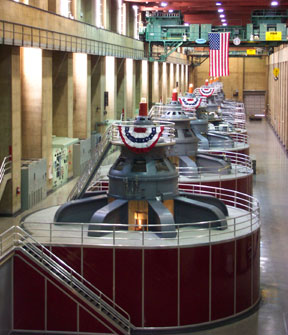
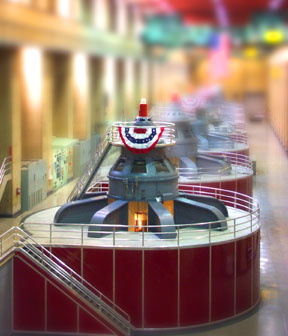
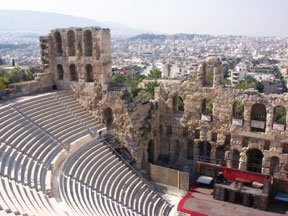
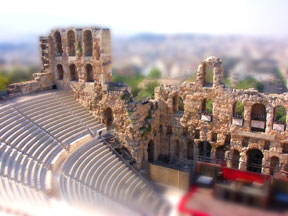
Nicely done! (I don't know why the audio blinks out at 20 seconds, but that's not important.) The technique is called "tilt-shift," and it's a way of tricking the eye to perceive real-life objects as if they were miniature models. The primary visual cue is focus, or depth of field. Think of it like this: if you look at a bunch of stuff on your desk, objects that are 2, 3 and 4 feet away from you are at different focal lengths. If you focus on one, the others are blurry. On the other hand, if you look at a bunch of stuff down the block, objects that are 1002, 1003, and 1004 feet away from you are all at virtually the same focal length and appear equally sharp.
So what you do is take a photo in which everything is at about the same focal length--overhead shots of large vistas work best--and progressively blur the bottom and top (that is, the nearest and farthest distances in the photo) to simulate being out of focus. I fake it in Photoshop, but you can also use a specialized camera lens to shoot tilt-shift photos in real time. It helps sell the illusion if you jack up the contrast until everything has a saturated, plastic sheen. The Allstate commercial goes further by making the action jerky, like stop-motion animation.
Here are some before-and-after photos I did back in October 2006 when I tried the technique. Some work better than others. I haven't played with it since, but would like to. Sometimes the results are pretty startling.


Here are a couple more. Again, some are better than others.


What I like about the tilt-shift technique is what it reveals about how we perceive, the cues we use to judge relationships and distance, and how amazing the brain is at putting it all together. Also how easily and subtly the brain can be fooled. It's pretty incredible when you think about it.
..
Nicely done! (I don't know why the audio blinks out at 20 seconds, but that's not important.) The technique is called "tilt-shift," and it's a way of tricking the eye to perceive real-life objects as if they were miniature models. The primary visual cue is focus, or depth of field. Think of it like this: if you look at a bunch of stuff on your desk, objects that are 2, 3 and 4 feet away from you are at different focal lengths. If you focus on one, the others are blurry. On the other hand, if you look at a bunch of stuff down the block, objects that are 1002, 1003, and 1004 feet away from you are all at virtually the same focal length and appear equally sharp.
So what you do is take a photo in which everything is at about the same focal length--overhead shots of large vistas work best--and progressively blur the bottom and top (that is, the nearest and farthest distances in the photo) to simulate being out of focus. I fake it in Photoshop, but you can also use a specialized camera lens to shoot tilt-shift photos in real time. It helps sell the illusion if you jack up the contrast until everything has a saturated, plastic sheen. The Allstate commercial goes further by making the action jerky, like stop-motion animation.
Here are some before-and-after photos I did back in October 2006 when I tried the technique. Some work better than others. I haven't played with it since, but would like to. Sometimes the results are pretty startling.
The swimming pool at the Disneyland Hotel. This one is helped by the fact that Disney builds things like pirate ships that already look like toys anyway.
Hydroelectric turbines at Hoover Dam. This one was greatly enhanced by boosting the colors' intensity to a candy-colored glow.
An ampitheater in Athens. This one was tricky. I kept the entire stone wall in focus while blurring the rest of the top and bottom of the picture. Then I cut out the arched windows to let the blurry background show through. I should've done more with the red-rimmed stage at lower right; in the tilt-shift image, it's hard to tell what and where it's supposed to be.
Here are a couple more. Again, some are better than others.
A rail station near Venice, Italy. I kept the yellow light pole in focus by masking it from the blurring effect, which helps sell the illusion.
Cacti in Tucson, Arizona. The one on the left was probably 20 to 25 feet tall. Again, I masked the two tallest cacti to keep them sharply focused while gradient-blurring the background and foreground.
What I like about the tilt-shift technique is what it reveals about how we perceive, the cues we use to judge relationships and distance, and how amazing the brain is at putting it all together. Also how easily and subtly the brain can be fooled. It's pretty incredible when you think about it.
..
Monday, January 25, 2010
That's Cancertainment
Both my blog and original "Mom's Cancer" webcomic site are getting a big boost in hits today due to an article at The Onion's "A.V. Club" titled "That's Cancertainment: 25 Great Songs, Books, Films,
Albums, and TV Shows in Which Cancer Plays a Major Role." Mine is Number 14:
"Using simple language, classically cartoony images, and not a hint of sugarcoating, Brian Fies’ 2006 graphic novel—first published as a webcomic—chronicles his colorful mother’s long struggle with lung cancer. It’s both an involving look at one woman’s battle with disease and a useful guide for what someone undergoing treatment for cancer can expect, both physically and mentally."
Unfortunately, as longtime readers know, while the momscancer.com site is still there, the webcomic isn't. My publisher asked me to take it down when the book was published, on the reasonable assumption that people wouldn't bother paying for a story in print (especially a relatively short story) when they could read it free online. That made sense to me and I was happy to do it.
The good news is that my publisher and I have been talking about putting "Mom's Cancer" back online as a free webcomic. The rationale now is that the book has been out a few years, it's pretty much sold all it's going to sell on its own, and reading the story online might prompt a few folks to seek out the print version. That also makes sense to me and I'm eager to do it. For various good reasons, we haven't followed through yet; if I'd known this article was coming, I would've pushed harder.
My bottom line has always been to get my family's story to as many people as possible, in whatever medium. Seeing "Mom's Cancer" return to its free webcomic roots would make me very happy--even though I still think the print version is well worth $14.95 (or a bargain $10.17 on Amazon right now).
.
Albums, and TV Shows in Which Cancer Plays a Major Role." Mine is Number 14:
"Using simple language, classically cartoony images, and not a hint of sugarcoating, Brian Fies’ 2006 graphic novel—first published as a webcomic—chronicles his colorful mother’s long struggle with lung cancer. It’s both an involving look at one woman’s battle with disease and a useful guide for what someone undergoing treatment for cancer can expect, both physically and mentally."
Unfortunately, as longtime readers know, while the momscancer.com site is still there, the webcomic isn't. My publisher asked me to take it down when the book was published, on the reasonable assumption that people wouldn't bother paying for a story in print (especially a relatively short story) when they could read it free online. That made sense to me and I was happy to do it.
The good news is that my publisher and I have been talking about putting "Mom's Cancer" back online as a free webcomic. The rationale now is that the book has been out a few years, it's pretty much sold all it's going to sell on its own, and reading the story online might prompt a few folks to seek out the print version. That also makes sense to me and I'm eager to do it. For various good reasons, we haven't followed through yet; if I'd known this article was coming, I would've pushed harder.
My bottom line has always been to get my family's story to as many people as possible, in whatever medium. Seeing "Mom's Cancer" return to its free webcomic roots would make me very happy--even though I still think the print version is well worth $14.95 (or a bargain $10.17 on Amazon right now).
.
Sunday, January 24, 2010
Mas Tapas
A few more bite-sized morsels:
My previous post touching on how most author's lose control of their stories the moment they sell them to Hollywood was vividly brought to life last night when my wife and I watched "Confessions of a Shopaholic." Karen Netflixed (look, a 21st-century verb!) it because she'd read and liked the book. Throughout the movie she kept apologizing, "This isn't how the book went."
I can't speak for the book but the movie was a real stinker, asking us to root for a completely unsympathetic heroine who, as far as I was concerned, deserved every bad thing that happened to her and more. I wouldn't want her as a friend, family member or coworker. Her nemesis was a debt collector who hounded her throughout the film, whom she avoided in supposedly cute and charming ways and had her revenge upon in the end. I was rooting for the collector.
Anyway, just another data point in the battle between art and commerce. I just wonder why so many filmmakers buy the rights to good source material and then gut it of everything that made people love it in the first place.
On the last night of his short run as host of "The Tonight Show," Conan O'Brien said, "All I ask of you, especially young people, is one thing: please don't be cynical. I hate cynicism--it's my least favorite quality and it doesn't lead anywhere. Nobody in life gets exactly what they thought they were going to get. But if you work really hard and you're kind, amazing things will happen."
I agree completely and have said similar things in a couple of interviews. It's a perspective that kind of snuck up on me; I might have even called myself a cynic when I was younger. But like Conan, I find it the personality trait I like least. Cynicism is easy and lazy. While cynics pose as courageous iconoclasts, sincerity is much braver, riskier, and more constructive. No one ever accomplished something great if they didn't think it was worth doing, and I guarantee they were surrounded by a hundred snide, sarcastic cynics eager to explain how it wasn't worth the effort and they were doomed to fail. Tearing down is easy; creating is hard.
Watch me tie everything together: although I didn't read the book Confessions of a Shopaholic, I'll bet it was written by a sincere author and made into a movie by cynical filmmakers. How 'bout that?
Note that cynicism isn't skepticism. I'm deeply skeptical, especially in a scientific double-blind-study kind of way. But I like to think I've grown increasingly uncynical, and learned to recognize and value sincerity in the work of others. It's a work in progress.
I bought and read a new old book yesterday, America's Great Comic-Strip Artists by Richard Marschall. Although it was published in 1989 I found it in an antique store, which I thought was odd. In any case, it's a neat collection of biographies and critical analyses of 16 great cartoonists dating back to the late 1800s, including several that are on my personal Top Twenty List including McCay, Herriman, Sterrett, Raymond, Caniff, Kelly and Schulz. It's well illustrated and very informative, puncturing some myths I'd heard repeated often enough to believe and telling me much I didn't know. Highly recommended if you can find it. Try your local antique store (?).
.
* * *
My previous post touching on how most author's lose control of their stories the moment they sell them to Hollywood was vividly brought to life last night when my wife and I watched "Confessions of a Shopaholic." Karen Netflixed (look, a 21st-century verb!) it because she'd read and liked the book. Throughout the movie she kept apologizing, "This isn't how the book went."
I can't speak for the book but the movie was a real stinker, asking us to root for a completely unsympathetic heroine who, as far as I was concerned, deserved every bad thing that happened to her and more. I wouldn't want her as a friend, family member or coworker. Her nemesis was a debt collector who hounded her throughout the film, whom she avoided in supposedly cute and charming ways and had her revenge upon in the end. I was rooting for the collector.
Anyway, just another data point in the battle between art and commerce. I just wonder why so many filmmakers buy the rights to good source material and then gut it of everything that made people love it in the first place.
* * *
On the last night of his short run as host of "The Tonight Show," Conan O'Brien said, "All I ask of you, especially young people, is one thing: please don't be cynical. I hate cynicism--it's my least favorite quality and it doesn't lead anywhere. Nobody in life gets exactly what they thought they were going to get. But if you work really hard and you're kind, amazing things will happen."
I agree completely and have said similar things in a couple of interviews. It's a perspective that kind of snuck up on me; I might have even called myself a cynic when I was younger. But like Conan, I find it the personality trait I like least. Cynicism is easy and lazy. While cynics pose as courageous iconoclasts, sincerity is much braver, riskier, and more constructive. No one ever accomplished something great if they didn't think it was worth doing, and I guarantee they were surrounded by a hundred snide, sarcastic cynics eager to explain how it wasn't worth the effort and they were doomed to fail. Tearing down is easy; creating is hard.
Watch me tie everything together: although I didn't read the book Confessions of a Shopaholic, I'll bet it was written by a sincere author and made into a movie by cynical filmmakers. How 'bout that?
Note that cynicism isn't skepticism. I'm deeply skeptical, especially in a scientific double-blind-study kind of way. But I like to think I've grown increasingly uncynical, and learned to recognize and value sincerity in the work of others. It's a work in progress.
* * *
I bought and read a new old book yesterday, America's Great Comic-Strip Artists by Richard Marschall. Although it was published in 1989 I found it in an antique store, which I thought was odd. In any case, it's a neat collection of biographies and critical analyses of 16 great cartoonists dating back to the late 1800s, including several that are on my personal Top Twenty List including McCay, Herriman, Sterrett, Raymond, Caniff, Kelly and Schulz. It's well illustrated and very informative, puncturing some myths I'd heard repeated often enough to believe and telling me much I didn't know. Highly recommended if you can find it. Try your local antique store (?).
.
Friday, January 22, 2010
Like He Needs MY Help
Opening April 2, it's "Diary of a Wimpy Kid: The Wrath of Khan." Something like that . . .
Back in October, while I sat eating most of a pizza that Jeff Kinney paid for, he showed me some iPhone photos he'd taken on the set of this movie. He was thrilled with the cast and how well the filmmakers had translated his characters and world from simple line art to live action.
Thanks to his series' enormous success and his own business acumen (Jeff is a sharp cookie), he had a lot more to do with the movie than most writers whose work is optioned. Generally, I understand that the last time most filmmakers care what the original author thinks is when they buy the rights to his or her story. But Jeff demanded and got quite a bit of creative control, which gives me some faith that the film will capture the tone and charm of his books. I hope so, and that it's a big hit for him. I'm not being at all insincere when I say that seeing a guy like Jeff enjoy success like this is almost as good as having it myself.
Almost.
.
Back in October, while I sat eating most of a pizza that Jeff Kinney paid for, he showed me some iPhone photos he'd taken on the set of this movie. He was thrilled with the cast and how well the filmmakers had translated his characters and world from simple line art to live action.
Thanks to his series' enormous success and his own business acumen (Jeff is a sharp cookie), he had a lot more to do with the movie than most writers whose work is optioned. Generally, I understand that the last time most filmmakers care what the original author thinks is when they buy the rights to his or her story. But Jeff demanded and got quite a bit of creative control, which gives me some faith that the film will capture the tone and charm of his books. I hope so, and that it's a big hit for him. I'm not being at all insincere when I say that seeing a guy like Jeff enjoy success like this is almost as good as having it myself.
Almost.
.
Wednesday, January 20, 2010
I Just Don't Get It
The list of things I just don't get grows ever longer. Sometimes it's my fault: I haven't kept up, something slipped past me, I should have been paying attention. Sometimes it's by design: the moment a middle-aged middle-class square like me gets rap music, it has by definition lost its reason to exist. I like that about it. But sometimes . . . sometimes I'm pretty sure the world has simply gone mad.
 A woman walking her dog in a stroller. Now, this wasn't the first time I'd seen it, but it was the first time I'd really noticed and thought, "That's nuts!"
Like last weekend, when I saw one of these:
.
Sure, some dogs are old or infirm, and being wheeled around is their only way to experience the outdoors. Great. That doesn't account for the many manufacturers and vendors of dog strollers that seem to have sprung up overnight, nor the many apparently healthy, vigorous dogs I see in them.
.
I mean . . . they're dogs! I've never known a dog yet that didn't love to walk! Sniffing every pole and bush, snapping alert to every bird and squirrel, checking the hydrant message board to see what their old buddy Bowser's been up to (and rolling in) lately. A walk around the block is a day at Disneyland for most dogs. Not to mention the value of exercise, or of wearing down their nails so they don't get overgrown. It seems cruel to deny it to them.
.
My wife Karen pointed out that every dog she's ever seen in a stroller looks happy enough. I guess. But your dogs aren't your children--they're a different species, with different needs. I find it both funny and pitiable, and suspect a person pushing a dog stroller is saying a lot more about their own needs than their dog's.
.
(If I've described any friends or readers of this blog, I'm sure you have excellent reasons and are the exception to the rule. Maybe you can explain it to me.)
.
Dog strollers: I just don't get it.
.
Tuesday, January 19, 2010
Tapas
Just a few odds and ends, none of which offers more than a bite-sized morsel:
* * *
Over the weekend I read The Geography of Bliss by Eric Weiner, who roamed the world to find the happiest people and figure out what made them that way. One of my daughters recommended it and I admit I was wary, afraid it'd be a doe-eyed New Age polemic about the evils of Western Civilization, finding peace within, blah blah.
.
Instead, I found Weiner to be a skeptical, observant, witty, and slightly crabby guide who doesn't pretend to do real research but delivers genuine insights nonetheless. He's an engaging travel writer who reminded me of Calvin Trillin, one of my favorites, and I was especially captivated by his chilling account of the former Soviet republic of Moldova, home of the unhappiest people on the planet. It was easy to see why. Thought-provoking and recommended. I should know to trust my girls.
.
* * *
.
I'm lining up a few exciting speaking engagements for 2010 that I'll write about as they get nearer and firmer. The first will be at the Bookbinders' Guild meeting in New York City on Tuesday, February 9. Here's how dumb I am: my first thought upon getting the invitation was, "I don't know anything about bookbinding!" But the Guild is in fact composed of high-powered big-time professionals in book publishing, manufacturing, and sales, and I'll be there (I gather) mostly to talk about how Mom's Cancer evolved from web content to book. Editor Charlie will be on the panel with me, so I expect that to be fun. Unfortunately, I don't think it's open to the public. But I'll blog all about it here!
.
* * *
.
Speaking of Mom's Cancer, I just received a draft of an article titled "Graphic Medicine: Comics as a New Tool in Medical Education and Patient Care," which will be published in the British Medical Journal in February. The paper, by Michael Green and Kimberly Myers at Penn State College of Medicine, looks at Mom's Cancer and Marissa Acocella Marchetto's Cancer Vixen as "novel and creative ways to learn and teach about illness." Thousands of physicians are going to read this paper, which also ties into another speaking engagement that looks like it's going to happen in the summer.
.
How cool is that? Wish Mom could've seen it.
.
Thursday, January 14, 2010
Building Pages
Another in a haphazard and probably tedious series of posts describing what I'm thinking about when working on a graphic novel. Lately I've been giving a lot of thought to building pages, because that's what I've been doing for what I hope will be my third book.
By "building pages" I mean laying down the nuts-and-bolts infrastructure of a story, from large to small. On the largest scale, chapters begin on right odd-numbered pages and end on left even-numbered pages (so that the next chapter can begin on a right odd-numbered page). That means every chapter should have an even number of pages. Unless you're, like, a total rebel.
In comics, Space = Time. The length and information density of a passage governs the pace at which the reader takes it in. A page with a lot of words and panels reads slower than a wordless single-panel splash page. In part of my new story, the action advances each day of the week: something happens on Monday, Tuesday, Wednesday, etc. To help convey that regular "sunrise-sunset" passage of time, I'm trying to make each day's episode cover the same number of pages and carry about the same amount of information. I want this part to read like a metronome. Then when I break the pattern, the reader will sense that something has changed.
The English-speaking eye reads a comic page from left to right, top to bottom. Action, and most importantly word balloons, should flow gracefully to guide the reader across and down the page. I do appreciate clever formal flourishes in which weird panel layouts, stylized lettering and so forth convey meaning--I did some in both Mom's Cancer and WHTTWOT--but for me those tricks are only worthwhile if they enhance the story and don't call attention to themselves. If a reader can't follow the action or steps back to think, "Interesting gimmick!" that's bad.
In addition to left-right up-down, you've got the two-page spread to think about: how the left and right pages work together as a unified, composed whole. Then there's the fact that when readers turn the page, their eyes naturally dart ahead to the bottom-right corner of the two-page spread before they start reading at the top left. They can't help it! So if you've got any surprises or big reveals, don't put them on an odd-numbered page! In fact, if I can I like to build some suspense toward the bottom-right to encourage the reader to turn the page and find out what happens next. If I were doing a comics version of that horror movie scene where a startling noise turns out to be an innocent cat, I'd put the startling noise on the bottom-right of one spread and the cat on the top-left of the next.
As a whole, a story usually needs a beginning, middle and end (or three acts), with movement, conflict and purpose. In addition, each chapter should have its own beginning, middle and end, and each scene within a chapter its own beginning, middle and end. When possible I further try to structure each page to also have its own little beginning, middle and end, building the book like a nested series of Russian matryoshka dolls. The flick of the reader's eyelid from the bottom of one page to the top of the next makes for a nice subliminal pause or transition in the action.

By "building pages" I mean laying down the nuts-and-bolts infrastructure of a story, from large to small. On the largest scale, chapters begin on right odd-numbered pages and end on left even-numbered pages (so that the next chapter can begin on a right odd-numbered page). That means every chapter should have an even number of pages. Unless you're, like, a total rebel.
In comics, Space = Time. The length and information density of a passage governs the pace at which the reader takes it in. A page with a lot of words and panels reads slower than a wordless single-panel splash page. In part of my new story, the action advances each day of the week: something happens on Monday, Tuesday, Wednesday, etc. To help convey that regular "sunrise-sunset" passage of time, I'm trying to make each day's episode cover the same number of pages and carry about the same amount of information. I want this part to read like a metronome. Then when I break the pattern, the reader will sense that something has changed.
The English-speaking eye reads a comic page from left to right, top to bottom. Action, and most importantly word balloons, should flow gracefully to guide the reader across and down the page. I do appreciate clever formal flourishes in which weird panel layouts, stylized lettering and so forth convey meaning--I did some in both Mom's Cancer and WHTTWOT--but for me those tricks are only worthwhile if they enhance the story and don't call attention to themselves. If a reader can't follow the action or steps back to think, "Interesting gimmick!" that's bad.
In addition to left-right up-down, you've got the two-page spread to think about: how the left and right pages work together as a unified, composed whole. Then there's the fact that when readers turn the page, their eyes naturally dart ahead to the bottom-right corner of the two-page spread before they start reading at the top left. They can't help it! So if you've got any surprises or big reveals, don't put them on an odd-numbered page! In fact, if I can I like to build some suspense toward the bottom-right to encourage the reader to turn the page and find out what happens next. If I were doing a comics version of that horror movie scene where a startling noise turns out to be an innocent cat, I'd put the startling noise on the bottom-right of one spread and the cat on the top-left of the next.
As a whole, a story usually needs a beginning, middle and end (or three acts), with movement, conflict and purpose. In addition, each chapter should have its own beginning, middle and end, and each scene within a chapter its own beginning, middle and end. When possible I further try to structure each page to also have its own little beginning, middle and end, building the book like a nested series of Russian matryoshka dolls. The flick of the reader's eyelid from the bottom of one page to the top of the next makes for a nice subliminal pause or transition in the action.
 Writing.
It occurs to me these might sound like very mechanical and formulaic rules. They aren't. First, they're more guidelines than rules (cf. Capt. Jack Sparrow), and second I'm not entirely diligent about applying them. The story always comes first, and sometimes telling the story right requires bending or breaking the rules. But I do believe it strengthens a story to use them when you can, and to know what you're doing when you can't. Your goal is to communicate with readers; the better you understand how they take in information, the more successfully you'll do that.
EDITED TO ADD: I forgot my standard disclaimer: This isn't the only way or the right way. It's just my way. Take what works for you and leave the rest.
I found this image of Kirk and Spock "kokeshi" while I was googling matryoshka dolls, and couldn't pass it up. I'll apologize for stealing the picture by providing a link to their supplier; just click on the image above.
* * *
I finished the first draft of the script for Book Three today. It came out to 150 pages even. I'll read it over a few times, send it off to Editor Charlie, and we'll see how it goes.
Saturday, January 9, 2010
I Kicked the Football and Did Not Get a Rock
My Cartoonist-in-Residence gig at the Charles M. Schulz Museum and Research Center turned out to be a pretty extraordinary afternoon, exceeding my every expectation. We got more people, sold more books (nearly sold out, in fact), and got a warmer reception than I'd anticipated. It was exhilarating and exhausting. My wife Karen took some great pictures, so instead of writing about it I thought I'd do a photo essay:

Since I was due to start at 1 p.m., Karen and I arrived an hour early to have lunch at the Warm Puppy Cafe in the ice arena across from the museum, where I found a familiar face looking back at me from a sign.
 A different sign in the museum lobby, this one highlighting Mom's Cancer. I mostly included this picture to show those of you far from Northern California how cool this lobby is. The whole place is first class.
 The museum had my entire literary output (all two books of it) for sale in the lobby. I think visitors just about cleaned them out; I know I signed a bunch.
 The point of being a "cartoonist in residence" is to show a cartoonist actually working. To that end, I brought in my drawing board, paper, ink, brush, pens, templates, rag, etc., and drew stuff for people while we talked. On the corner is the model spaceship I built from a staircase post, golf tee, CO2 cartridges, and miscellaneous hardware while working on WHTTWOT. The pink sticky note tells visitors which pages of the book they can find the spaceship on. I also brought along my Eisner Award, because if I don't brag about me, who will? Some people really enjoyed seeing it and spinning the globe.

This angled countertop runs along one wall of the Education Room, and I filled it with original artwork from both Mom's Cancer and WHTTWOT, again with the idea of giving visitors a sense of how drawings turn into books. Sticky notes tell them where to find the art in the book, and let me show how, for example, the cover of WHTTWOT was composed of five separate drawings that I integrated in Photoshop. My little pennant from the 1939 World's Fair and a model car I used are sitting at the top of the counter.
 This was pretty much my view for two-plus hours. While I worked the drawing board, Karen did a heroic job taking visitors through the original art on the counter. Also, on the flatscreen TV on the wall behind me, I looped a PowerPoint presentation that showed how several drawings went from sketches to pencils to inks to published art. It's all about the process.
 Friend of the Blog Mike "Sligo" Harkins, who knew me in a past life when we both wrote for the same local magazine. It was really great to reconnect, I felt bad we didn't have more time.
This photo gives a good overview of how my stuff was laid out, with the art at left and my drawing table at right. By the way, did I mention that Mrs. Charles Schulz stopped by at the end of my residency? I didn't? Don't know how I overlooked that. Seriously, I'd never met Jeannie but had always heard how kind and gracious she is. I can confirm that. I introduced her to my work, and we ended up talking for almost an hour. She's my new best friend now.
 Jeannie Schulz and museum Education Director Jessica Ruskin, who arranged everything. We all called each other early in the morning to coordinate our navy blue outfits. You'll notice I made sure that Mrs. Schulz left with copies of both my books, because I am not stupid.
I really met the most extraordinary people today. Everyone who came to see me and reads this post, thanks so much! I was especially taken with several kids who reminded me a lot of myself around 12 to 17, just trying to absorb as much as I could about the art and craft of cartooning. There were a couple of folks I'll never forget, for all the right reasons. It was also great to see some personal friends turn out and lend their support. Thanks to Jessica, Mrs. Schulz and the museum staff for making me so welcome. Very much appreciated! Call again anytime.
 The Education Room has this big round window so you can see into it from the hallway. I've got my head down drawing at the right.
.
Friday, January 8, 2010
The Bestish of 2009
I've gradually stopped citing book reviews here on my blog, instead using my WHTTWOT Facebook Fan Page to point them out when I find them. Someday I'll write a blog post about how my perspective on reviews has evolved over time to where I've pretty much resolved not to pay them much mind or respond to them, good or bad. Basically, I needed to grow a thicker skin.
But WHTTWOT did get nice mentions on two critics' year-end "Best of 2009" lists that I didn't want to pass unnoticed. Many terrific graphic novels and comics were published last year, and just to be considered in their company is a nice achievement and honor.
On Comic Book Resource's "Robot 6" blog, Brigid Alverson called WHTTWOT one of her ten favorite books of 2009: "This is a flawed masterpiece, but a masterpiece nonetheless. Fies looks at changing attitudes toward science through the eyes of a boy and his father as they live through World War II, the Cold War, and the space age, and he intersperses this narrative with a fictional comic reflecting each era. A bit talky but interesting and beautifully produced."
My book also earned an Honorable Mention on a 2009 Top Ten list put together by Marc Sobel of Comic Book Galaxy's "Trouble With Comics" column. He wrote: "I've seen a few negative or lukewarm reviews of this book, which I think are pretty unfair. The story is a little light, I'll admit, but Fies is a cartoonist with tremendous range. I love the way he varies his style in this book to reflect the maturity of his lead character, and his use of digital tools, from embedded photos to digital coloring and effects, is impressive. There's also a sweetness to this book that I found refreshing. So many graphic novels these days focus on human tragedy and violence. It was a pleasant change of pace to read about a boy who loved and idealized his father, even if the end result was a little sappy. Not quite a top 10 book, but far better than the criticism it’s received."
There's no need for well-meaning friends to race to my defense in the comments, protesting the "flawed" or "talky" or "sappy" criticisms. They're fair--heck, I'll even cop to them. In the big picture, at the end of a year overflowing with great books by very talented people, these critics thought enough of mine to include it on their lists. I appreciate that a lot.
.
But WHTTWOT did get nice mentions on two critics' year-end "Best of 2009" lists that I didn't want to pass unnoticed. Many terrific graphic novels and comics were published last year, and just to be considered in their company is a nice achievement and honor.
On Comic Book Resource's "Robot 6" blog, Brigid Alverson called WHTTWOT one of her ten favorite books of 2009: "This is a flawed masterpiece, but a masterpiece nonetheless. Fies looks at changing attitudes toward science through the eyes of a boy and his father as they live through World War II, the Cold War, and the space age, and he intersperses this narrative with a fictional comic reflecting each era. A bit talky but interesting and beautifully produced."
My book also earned an Honorable Mention on a 2009 Top Ten list put together by Marc Sobel of Comic Book Galaxy's "Trouble With Comics" column. He wrote: "I've seen a few negative or lukewarm reviews of this book, which I think are pretty unfair. The story is a little light, I'll admit, but Fies is a cartoonist with tremendous range. I love the way he varies his style in this book to reflect the maturity of his lead character, and his use of digital tools, from embedded photos to digital coloring and effects, is impressive. There's also a sweetness to this book that I found refreshing. So many graphic novels these days focus on human tragedy and violence. It was a pleasant change of pace to read about a boy who loved and idealized his father, even if the end result was a little sappy. Not quite a top 10 book, but far better than the criticism it’s received."
There's no need for well-meaning friends to race to my defense in the comments, protesting the "flawed" or "talky" or "sappy" criticisms. They're fair--heck, I'll even cop to them. In the big picture, at the end of a year overflowing with great books by very talented people, these critics thought enough of mine to include it on their lists. I appreciate that a lot.
.
Thursday, January 7, 2010
Graphic Noveling in Three Acts
From my very first post in July 2005, one of my main reasons for blogging has been to share and document how a graphic novel gets made. A few people enjoy learning about the process, and it makes a handy diary for me to look back at as well. In that spirit, I thought I'd start writing a bit more about what I hope will be my third book--let's call it Mystery Project X--while revealing absolutely nothing about the story itself. Because I'm funny that way.
The main thing to keep in mind is that my way isn't the only way or right way; it's just mine. It actually just occurred to me that I wrote Mom's Cancer, Whatever Happened to the World of Tomorrow, and Mystery Project X in three very different ways, so that someone who's stuck with me from the start (all six of you) would see three different models in action.
Mom's Cancer was a memoir of actual events done in approximately real time, although delayed several weeks while I wrote, drew, and most importantly edited. I did try to craft a story with a beginning, middle and end (even though I didn't know at the time what the end would be), but it was largely structured by real life. WHTTWOT grew from early ideas that mutated into something completely unrecognizable from their origins. Inspiration came in spontaneous bits and clumps: Pop and Buddy, the old comic books, the timeless "Carousel of Progress" tour of the decades. Even now, I can't look back and explain how I got from A to B, but I think it worked and am happy with the result.
My approach to Mystery Project X has been more conventional and structured. Figured I might as well give it a shot. Unlike my first two books it's straight fiction, and the first things I worked on were character and story. Not plot! My friend Otis Frampton distinguishes plot from story like this: The plot of "Star Wars" is, "Darth Vader captures Princess Leia, but the droids R2-D2 and C3PO escape with the Death Star plans to the planet Tatooine, where they're bought by Luke Skywalker who etc. etc. etc. " The story of "Star Wars" is, "A young farmboy who yearns for adventure goes on a heroic quest aided by an exiled mentor, a princess on a mission, and a fortune-seeking rogue." Story is subtext: who wants what and why. Plot tells you how they succeed or fail.
So I've got three characters. I don't remember how I got them, but each wants something that conflicts with what the others want. I know who will succeed and fail. A fair start. I'm imagining and sketching scenes, things I picture them doing. I've got three or four really cool images stuck in my head, especially one that encapsulates the whole tale for me. I feel like if I keep that image in mind, my story will stay on track. I start to mold a plot around the story: How do they meet, what happens next, what happens after that, how do they all wind up at the end?
Since it's a work of fiction, I set out to apply the fundamental three-act dramatic structure, which goes back to the Greeks. You can think of the three acts as simply the beginning, middle, and end. Or the set-up, conflict, and resolution. Or the thesis, antithesis, and synthesis. Act One sets up the situation and conflicts, and ends with the hero going into action. In Act Two the situation plays out, characters clash, and the hero's problems mount. In Act Three, the hero figures out how to resolve the situation and wins (or, in a tragedy, loses).
Again using "Star Wars" as an example, Act One is everything leading up to the moment Luke sees his home destroyed and decides to go with Obi Wan. Everything's set up, we understand the stakes and rules, the players are in place (although, interestingly, we haven't met Han Solo yet), the game is afoot. Act Two is all the action that leads up to Luke, Leia and Han escaping from Vader and getting safely to the rebels. Act Three is when our heroes use what they learned in Act Two to attack the Death Star and win.
To help me map out my story and plot, I wrote each bit (or scene or beat) on a sticky note and put them on a poster board divided into three acts. In the past I've done the same thing with index cards spread all over the floor; works just as well. This immediately helped me see holes or spots that needed work. For example, I discovered during this process that the hero of my story wasn't who I thought it was, leading me to go back and rejigger everything accordingly. I added minor characters to provide information or tension, and rewrote my ending. It's a really good exercise, and since the story's just sticky notes you can shuffle them any way you want or throw out whole sections without fretting that it needs to be perfect.
Once I was happy with that, I transcribed the sticky notes into an outline, filling in plot details as I went. That 16-page outline, along with five pages of finished art showing how the characters and their world look, became the proposal that I sent to Editor Charlie in November. With his informal (i.e., "nothing in writing yet") interest and encouragement, I'm now working to turn the outline into a full script broken into pages, panels, captions and dialog. This also offers many opportunities for discovery and revision. The characters are finding their voices, plot holes are being unearthed and resolved, clues needed to solve mysteries on Page 100 are being planted on Page 5. Yesterday I wrote Page 89; I currently expect the book to come out to about 140 pages. I hope to have a good first draft done within a couple of weeks, send that to Charlie, and see what happens. One way or another I mean to do this book, even if I have to photocopy it myself and pass out copies on street corners.
So that's where I'm at and how I got here. I don't know if writing and drawing Mystery Project X will be a drama, comedy, tragedy or farce for me--I always hold out the possibility that everything could go completely to Hell at any moment, and I kind of feel like I'm going out on a potentially embarrassing limb here in case it does. But from time to time, with your indulgence, I'll let you know how it's going.
.
The main thing to keep in mind is that my way isn't the only way or right way; it's just mine. It actually just occurred to me that I wrote Mom's Cancer, Whatever Happened to the World of Tomorrow, and Mystery Project X in three very different ways, so that someone who's stuck with me from the start (all six of you) would see three different models in action.
Mom's Cancer was a memoir of actual events done in approximately real time, although delayed several weeks while I wrote, drew, and most importantly edited. I did try to craft a story with a beginning, middle and end (even though I didn't know at the time what the end would be), but it was largely structured by real life. WHTTWOT grew from early ideas that mutated into something completely unrecognizable from their origins. Inspiration came in spontaneous bits and clumps: Pop and Buddy, the old comic books, the timeless "Carousel of Progress" tour of the decades. Even now, I can't look back and explain how I got from A to B, but I think it worked and am happy with the result.
My approach to Mystery Project X has been more conventional and structured. Figured I might as well give it a shot. Unlike my first two books it's straight fiction, and the first things I worked on were character and story. Not plot! My friend Otis Frampton distinguishes plot from story like this: The plot of "Star Wars" is, "Darth Vader captures Princess Leia, but the droids R2-D2 and C3PO escape with the Death Star plans to the planet Tatooine, where they're bought by Luke Skywalker who etc. etc. etc. " The story of "Star Wars" is, "A young farmboy who yearns for adventure goes on a heroic quest aided by an exiled mentor, a princess on a mission, and a fortune-seeking rogue." Story is subtext: who wants what and why. Plot tells you how they succeed or fail.
So I've got three characters. I don't remember how I got them, but each wants something that conflicts with what the others want. I know who will succeed and fail. A fair start. I'm imagining and sketching scenes, things I picture them doing. I've got three or four really cool images stuck in my head, especially one that encapsulates the whole tale for me. I feel like if I keep that image in mind, my story will stay on track. I start to mold a plot around the story: How do they meet, what happens next, what happens after that, how do they all wind up at the end?
Since it's a work of fiction, I set out to apply the fundamental three-act dramatic structure, which goes back to the Greeks. You can think of the three acts as simply the beginning, middle, and end. Or the set-up, conflict, and resolution. Or the thesis, antithesis, and synthesis. Act One sets up the situation and conflicts, and ends with the hero going into action. In Act Two the situation plays out, characters clash, and the hero's problems mount. In Act Three, the hero figures out how to resolve the situation and wins (or, in a tragedy, loses).
Again using "Star Wars" as an example, Act One is everything leading up to the moment Luke sees his home destroyed and decides to go with Obi Wan. Everything's set up, we understand the stakes and rules, the players are in place (although, interestingly, we haven't met Han Solo yet), the game is afoot. Act Two is all the action that leads up to Luke, Leia and Han escaping from Vader and getting safely to the rebels. Act Three is when our heroes use what they learned in Act Two to attack the Death Star and win.
To help me map out my story and plot, I wrote each bit (or scene or beat) on a sticky note and put them on a poster board divided into three acts. In the past I've done the same thing with index cards spread all over the floor; works just as well. This immediately helped me see holes or spots that needed work. For example, I discovered during this process that the hero of my story wasn't who I thought it was, leading me to go back and rejigger everything accordingly. I added minor characters to provide information or tension, and rewrote my ending. It's a really good exercise, and since the story's just sticky notes you can shuffle them any way you want or throw out whole sections without fretting that it needs to be perfect.
Once I was happy with that, I transcribed the sticky notes into an outline, filling in plot details as I went. That 16-page outline, along with five pages of finished art showing how the characters and their world look, became the proposal that I sent to Editor Charlie in November. With his informal (i.e., "nothing in writing yet") interest and encouragement, I'm now working to turn the outline into a full script broken into pages, panels, captions and dialog. This also offers many opportunities for discovery and revision. The characters are finding their voices, plot holes are being unearthed and resolved, clues needed to solve mysteries on Page 100 are being planted on Page 5. Yesterday I wrote Page 89; I currently expect the book to come out to about 140 pages. I hope to have a good first draft done within a couple of weeks, send that to Charlie, and see what happens. One way or another I mean to do this book, even if I have to photocopy it myself and pass out copies on street corners.
So that's where I'm at and how I got here. I don't know if writing and drawing Mystery Project X will be a drama, comedy, tragedy or farce for me--I always hold out the possibility that everything could go completely to Hell at any moment, and I kind of feel like I'm going out on a potentially embarrassing limb here in case it does. But from time to time, with your indulgence, I'll let you know how it's going.
.
Subscribe to:
Posts (Atom)